The non-developer SDLC
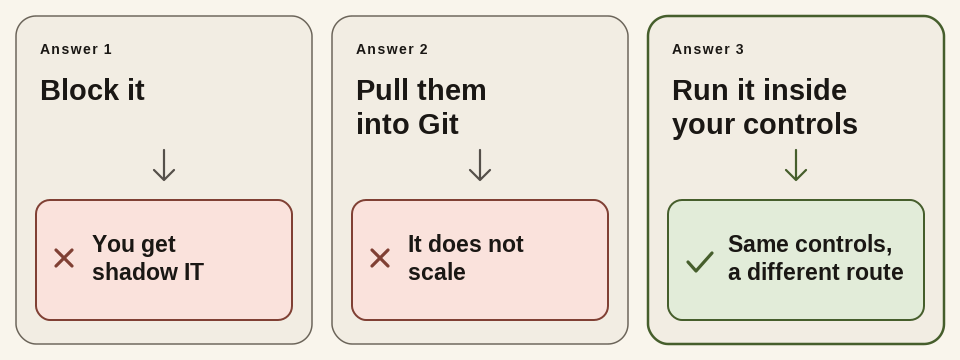
The non-developer SDLC is the lifecycle of software built by people who don't write code, once it is shared with others or connected to company data. It runs from build to retire and meets the same controls as the developer SDLC by a different route.
What counts
Software enters the non-developer SDLC once it is shared with others or connected to company data.
- Software other people use. It is in from the moment a second person opens it.
- Software connected to company data. It is in, even with one user. A tool that reads the CRM or a company database is the company's concern.
- Software only its builder uses, on their own data. It is out until someone shares it or connects it to company data.
- With AI or without it. AI explains why there is so much more of it now. A low-code tool counts the same way.
- Seven stages. It runs through build, publish, share, run, change, hand over and retire. Testing happens at publish.
The lifecycle
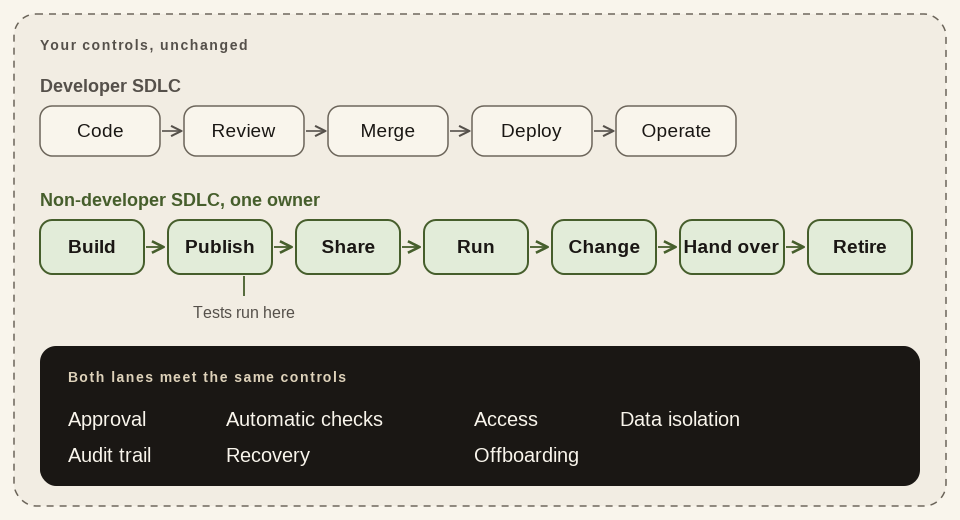
The non-developer SDLC sits inside the controls you already run, beside the developer SDLC. Each stage has one accountable owner.
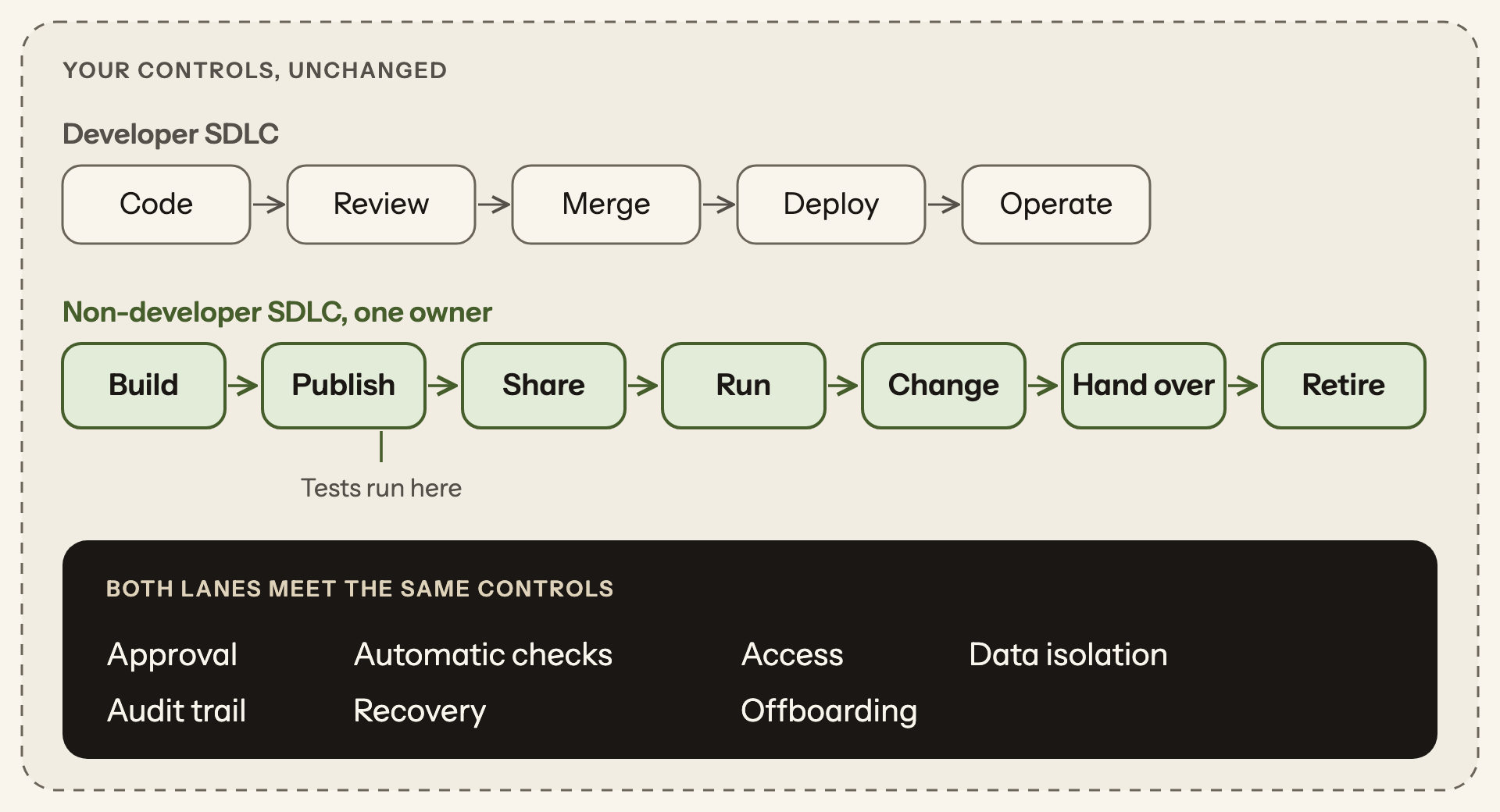
- Build. The builder uses whatever tool they already have, with AI or without it.
- Publish. Checks run on the version before it goes live. This is where testing happens.
- Share. The owner decides who can open it, and the platform enforces access outside the app.
- Run. The app and its data stay apart from every other app.
- Change. The platform keeps every version, so the owner can roll back any change.
- Hand over. When the owner moves on, the app moves to someone else.
- Retire. The owner pauses the app, or removes it with its data.
The controls
Nothing changes in what you answer to. Everything changes in how each control is met.
| Control | Developer SDLC | What the platform must provide |
|---|---|---|
| Change approval | Pull request review, change ticket | An approval step before a version goes live |
| Code review | Peer review, static analysis | Automatic checks on every version |
| Separation of duties | The author cannot merge alone | The builder cannot approve their own release |
| Access control and review | Identity and access management, periodic review | Private by default, with access enforced outside the app |
| Data isolation | Separate databases per service, least privilege | Each app's data kept apart, with entries scoped per person when needed |
| Audit trail | Version control history, deploy logs | A record of who changed what, and when |
| Rollback and recovery | Revert and redeploy, backups | Every version kept, and data that can be restored |
| Offboarding | Reassign repositories and services | Apps that are handed over when their builder leaves |
Questions
How is this different from citizen development?
Citizen development is about who builds. The non-developer SDLC is about what happens to the software after it is built, from publishing and sharing to handover and retirement. It asks how you meet each control when the builder never opens a code repository.
Does it need AI?
No. AI is why there is so much more of this software now. A tool built in a low-code product without AI counts the same way.
Does it replace our SDLC?
No. It lives inside it. Your controls and audit obligations stay the same. Only the way you meet each one changes.
Who owns an app?
The person who built it, until they hand it over. Every app has one accountable owner at every stage. When the owner leaves, the app moves to someone else.
Reuse
The definition, the diagrams and the controls table on this page are free to reuse under CC BY 4.0. Credit "Cloche, cloche.dev/non-developer-sdlc".
The story behind the term is in The non-developer SDLC: nothing changes, and everything is changing. If a line here does not hold in your organization, write to hi@cloche.dev.
Sources
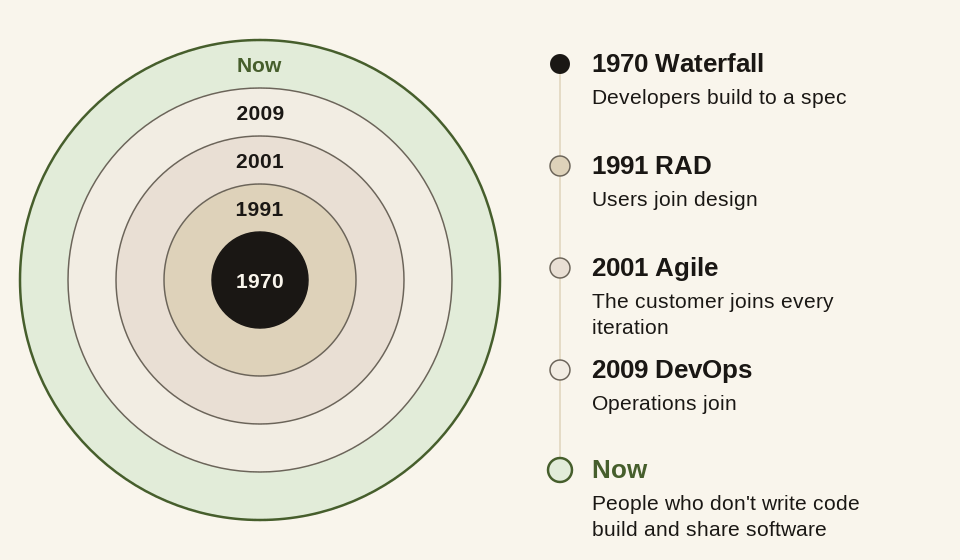
The definition builds on how each SDLC model widened who is in the loop, and on what technology leaders say about the software built outside it.
- Winston Royce, 1970. Managing the Development of Large Software Systems.
- Beck et al., 2001. Manifesto for Agile Software Development.
- Werner Vogels, interviewed by Jim Gray in ACM Queue, 2006. A Conversation with Werner Vogels.
- Emily Freeman, AWS re:Invent 2021. DevOps revolution.
- Retool, 2026. AI Governance Report 2026.